
M
The cause is usually mechanical, not electrical
An opener can stall because the door is binding, a roller is failing, a hinge is bent, or a cable slipped. The door has to be made true in the tracks before an opener is judged.
Describe what the door is doing once and get connected with a local Laredo-area contractor who repairs off-track doors, cables, rollers, and damaged track sections.
CALL NOW: (956) 477-1930
Garage door off track repair is the work of getting a door that has climbed out of its metal tracks back into proper alignment, then fixing the underlying cause so it stays there.
When a door is off track, the door's weight is no longer being guided evenly by the left and right tracks. That can bend track, damage rollers, fray or snap lift cables, and put uneven load on hinges and panels. It can also trap a car inside or outside because the door won't move smoothly.
A few signs homeowners in Laredo call about:
If the door is stuck half open, treat it like a heavy moving object that can shift. Avoid trying to force it with the opener. Local garage door repair also covers other common repair situations homeowners run into during the same call.
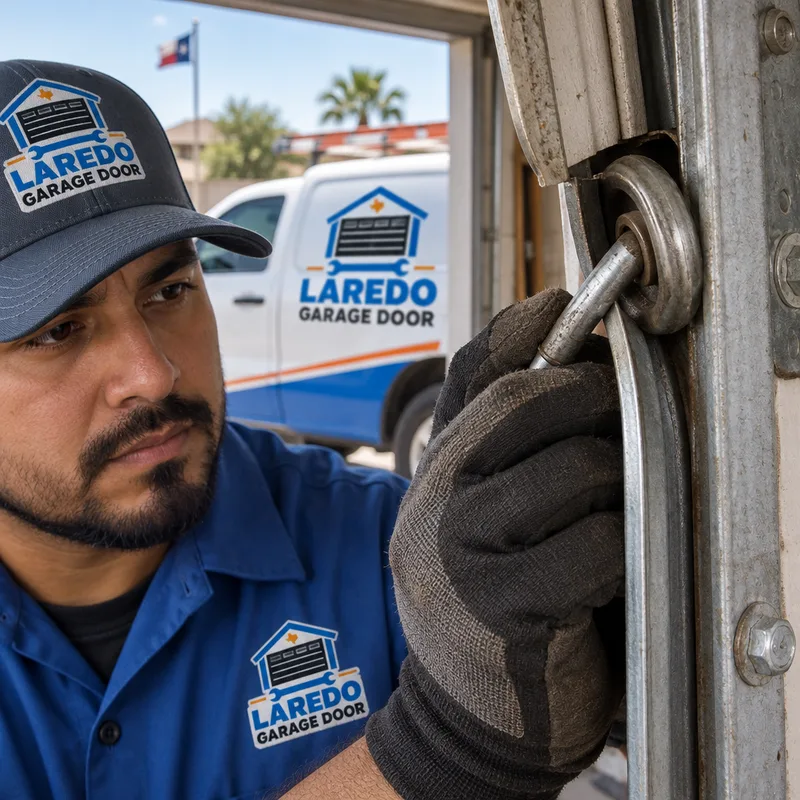
A contractor typically checks whether both tracks are plumb and secured to the framing, whether the rollers are intact, whether the cables are seated on the drums, and whether the door sections and hinges remain square. The fix can be as minor as resetting a roller or as involved as repairing bent track and replacing damaged parts.
An opener can stall because the door is binding, a roller is failing, a hinge is bent, or a cable slipped. The door has to be made true in the tracks before an opener is judged.
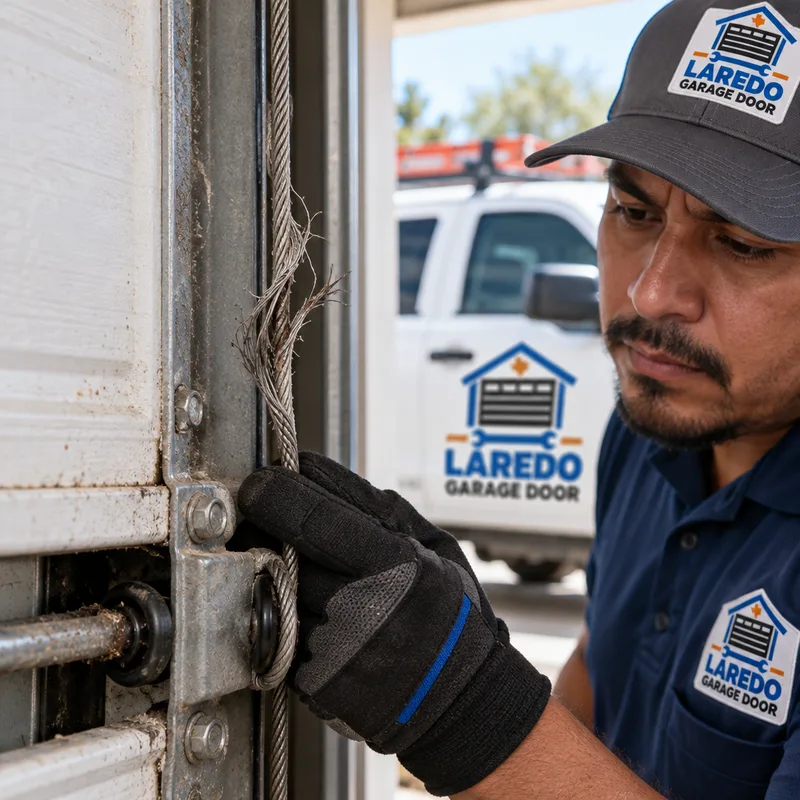
If one cable is loose, frayed, or broken, the door can rack to one side and pull rollers out of the track. Fixing alignment without addressing cable condition is a common reason the problem returns.
Contractors check track spacing, plumb, and bracket tightness, then look for kinks or spread at the track mouth where rollers enter. A damaged section may be straightened or replaced depending on severity.
Worn bearings, cracked nylon, or a bent roller stem can roll “okay” until the door hits a tight spot and jumps. Garage door roller repair may mean replacement rather than trying to salvage a worn part.
Laredo Garage Door connects you with a local contractor who explains what they found, the options, and what they recommend. You decide whether to move forward.
Mention whether the door was hit by a car, made a loud bang, stopped mid-travel, or looks crooked. Also note whether the opener is disconnected and whether any cable is hanging.
The contractor typically secures the door position, checks for a jammed roller, and confirms whether the lift cables are still on the drums and routed correctly.
Track plumb and spacing, bracket tightness, roller condition, hinge alignment, and the squareness of the door sections are checked. Bent or spread track areas are identified.
A simple reset may be enough if nothing is bent. Worn or damaged parts may call for roller replacement, a replacement track section, or cable repair.
The door is run up and down to confirm it stays centered and lifts evenly. Fasteners may be rechecked after the first test because track brackets can shift when load returns.
If the door is crooked, stuck, or a cable is dangling, describe what you're seeing once and get connected with a local contractor who handles off-track repairs every week.
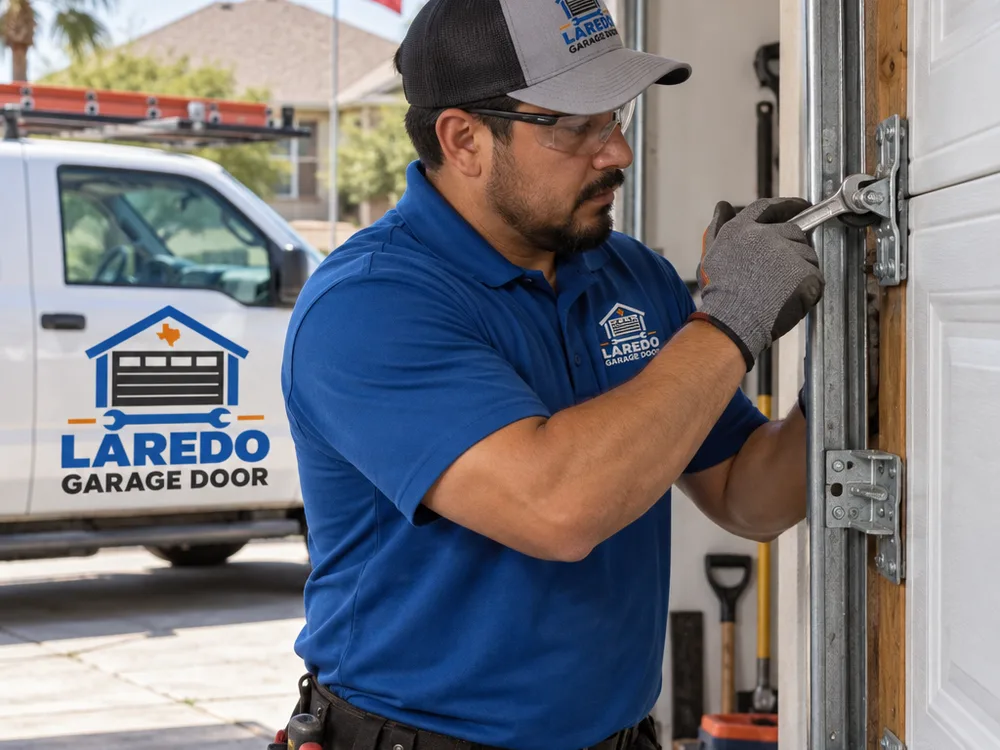
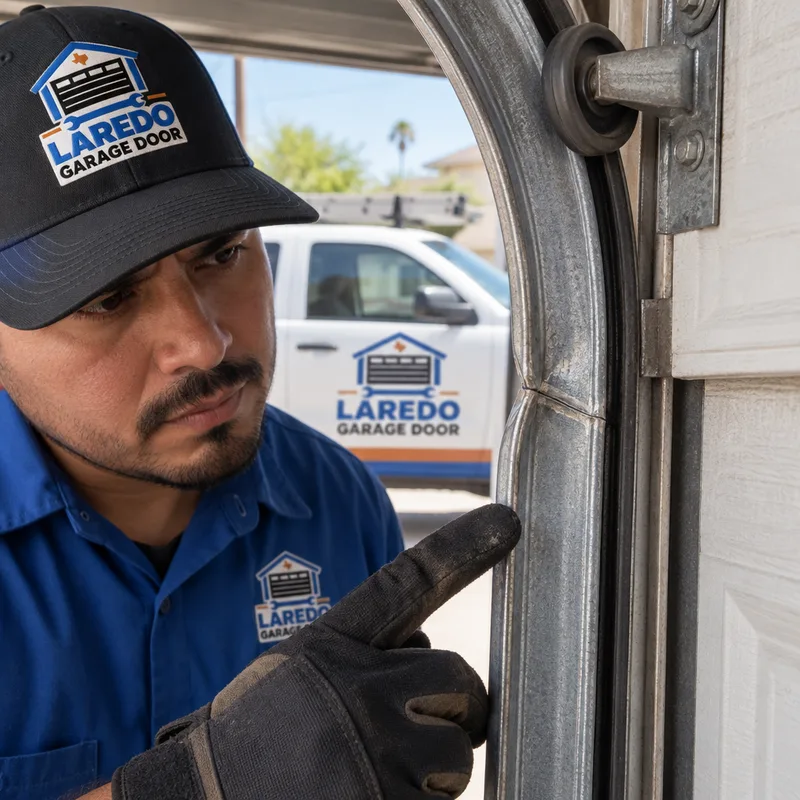
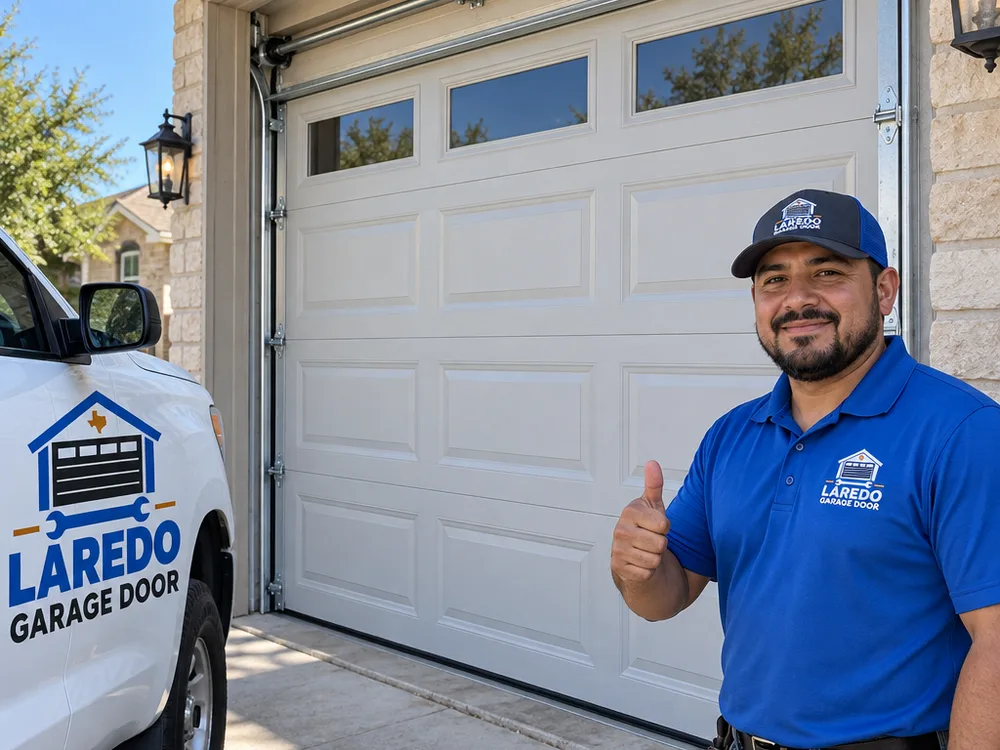
A door goes off track when something forces the rollers out of the track channel or spreads or bends the track so the rollers cannot stay captured. Common triggers include an impact, a worn or broken roller, loosened track brackets, and cable problems that lift one side unevenly.
A broken cable may hang near the track or cause the door to lift on one side and bind on the other. Another clue is a door that suddenly became heavy to lift manually or looks diagonal when partly open. A contractor can confirm whether the cable snapped, slipped off the drum, or is badly frayed.
It can be unsafe because the door may shift when tension and alignment are wrong, especially if a cable is off the drum or a track is bent. Leave the door in place, avoid using the opener, and describe what you see so the contractor can plan to stabilize it.
The contractor first checks whether the bend is localized or whether the track is out of plumb along its length. Minor deformation may be straightened and the brackets re-secured, while a severely kinked or split section is commonly replaced so the roller path is true.
Replacement is often appropriate when the bearing is rough, the wheel is cracked, the stem is bent, or the roller repeatedly pops out under load. The contractor typically checks several rollers because uneven wear can point to track alignment issues rather than one isolated part.
Share the door type, what happened before it jammed, whether it is partly open, and whether you see a loose cable or a roller out of the track. If it is safe to observe, note which side looks lower and whether the track appears bent near the bottom or curve.
Sometimes, because a cable can slip, fray, or lose proper seating on the drum without fully breaking. The contractor will check cable condition, drum seating, and bottom bracket attachment because an off-track event can damage strands and contribute to another failure.
Call Laredo Garage Door and describe the problem once. We'll connect you with a local contractor who can inspect the tracks, rollers, and cables, explain the repair options, and leave the decision with you.