
D
You describe it once
Instead of repeating the story to multiple shops, share your symptoms one time and get connected with a contractor who works on springs.
Describe what your door is doing once, and we'll connect you with a local Laredo-area contractor who can handle the spring repair or replacement.
CALL NOW: (956) 477-1930
A broken garage door spring is one of the most common reasons a garage door suddenly won't open, opens a few inches and stops, or slams shut. Springs do the heavy lifting. When one snaps, the opener may hum or strain, cables can go slack, and the door can feel surprisingly heavy if you try to lift it by hand.
In Laredo, many garages see frequent cycles because the garage doubles as the main entry for day-to-day use. That wear shows up first in the springs. The right fix depends on which spring system your door uses and what condition the other parts are in.
Laredo Garage Door is a referral service. You call, describe what's happening, and we connect you with an independent local contractor who handles garage door spring work in Laredo and nearby areas.
If you're also tracking other door problems—rollers, sensors, or off-track doors—that is still part of garage door repair, and the contractor you speak with can tell you what should be addressed with the spring work versus scheduled later.
Instead of repeating the story to multiple shops, share your symptoms one time and get connected with a contractor who works on springs.
Torsion and extension springs are different jobs. The goal is to connect you with someone who handles your door's setup.
A contractor who regularly works on Laredo homes sees the common door sizes, track setups, and builder-installed hardware in the area.
You talk directly with the contractor, ask questions, and decide whether to move forward after you hear the plan.
Garage door springs store serious energy. A contractor can secure the door, control the tension, and replace parts in the right order.
The contractor starts with what you're seeing: a door that won't open, a loud bang, uneven lift, a hanging cable, or an opener that strains. They'll also confirm whether the door uses torsion springs above the door or extension springs along the horizontal tracks.
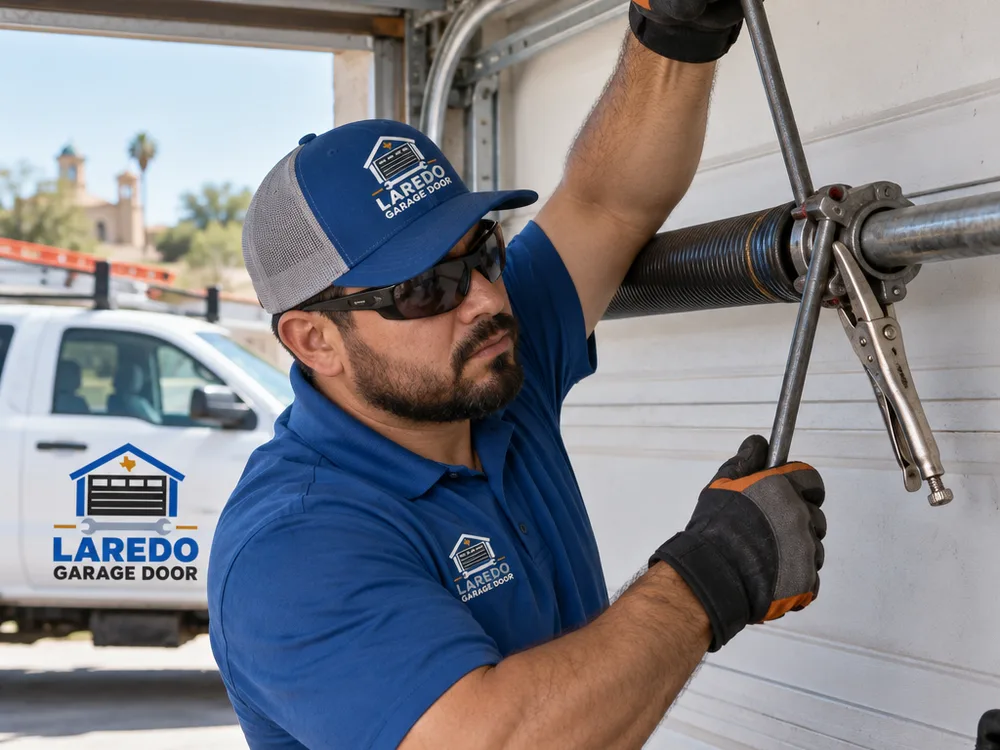
Before anything is loosened, the door is secured so it cannot drop and the opener is disengaged. On torsion systems, the remaining tension is managed with proper winding bars and locking pliers on the shaft.
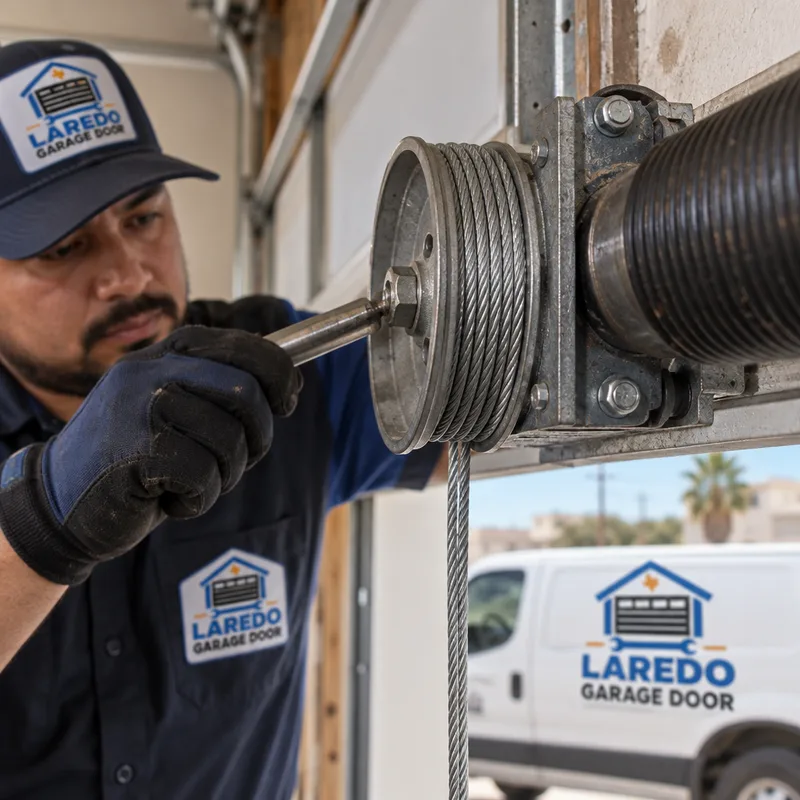
A spring failure can affect lift cables, bottom brackets, bearing plates, drums, rollers, and the shaft. If the door lifted crooked, the contractor also checks track alignment and cable condition.
For a torsion system, the spring is matched to the door's weight and height, installed on the shaft, and wound correctly. For an extension system, matched springs and safety cables are addressed so the door lifts evenly.
The door should lift smoothly by hand and hold its position without drifting. The opener is reconnected and tested so it is not doing the spring's job, with force and travel adjustments considered after balance is restored.
If the door is stuck, lifting unevenly, or you heard a sharp bang from the garage, describe what happened and get connected with a local contractor who handles broken spring repair.
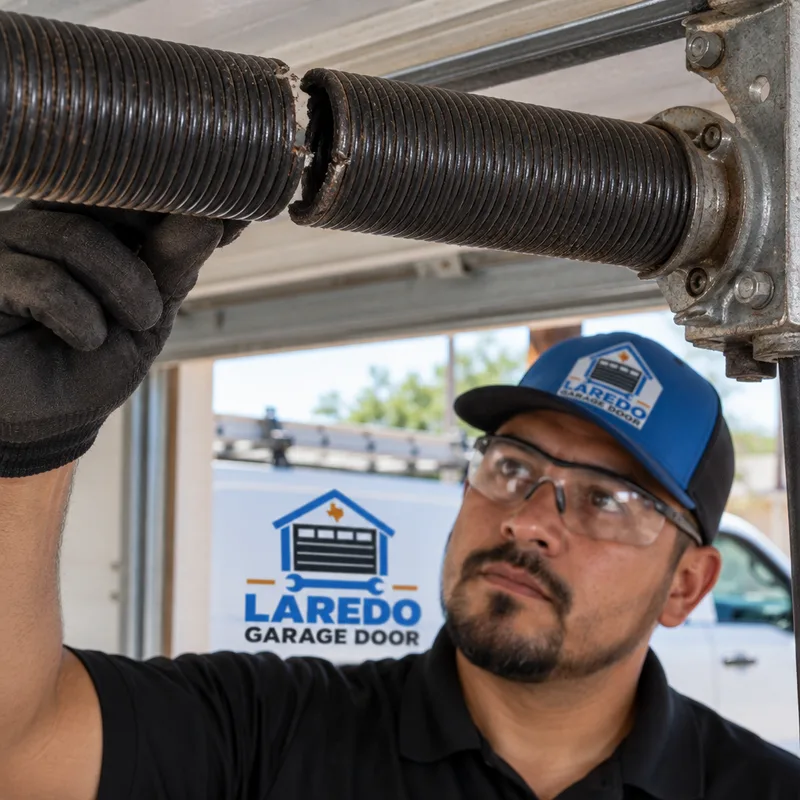
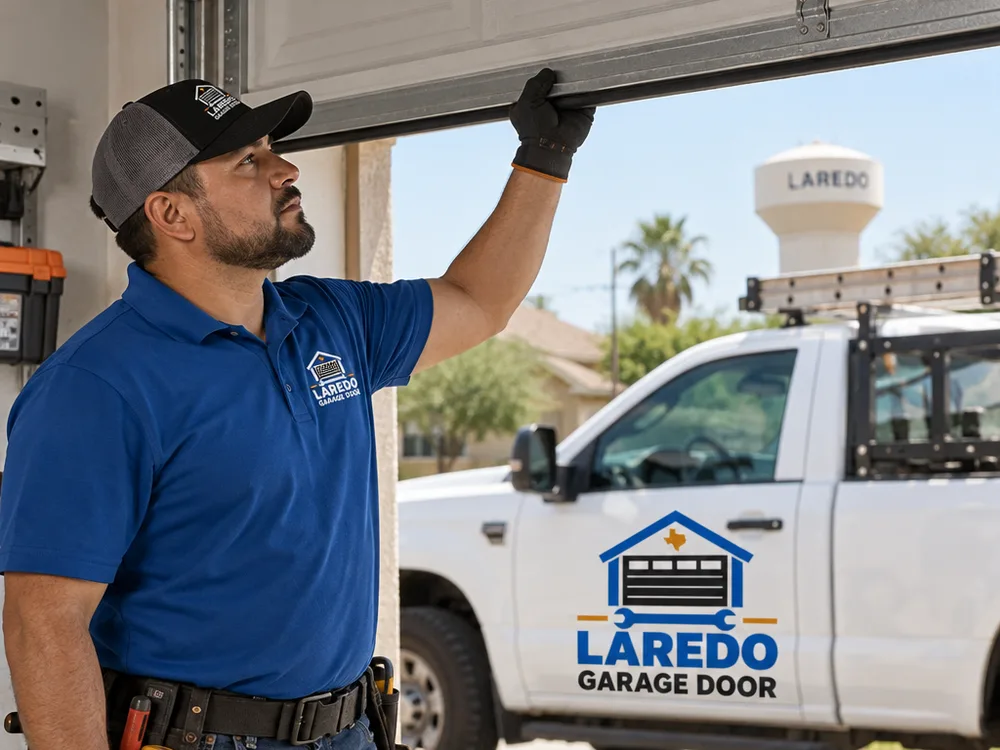
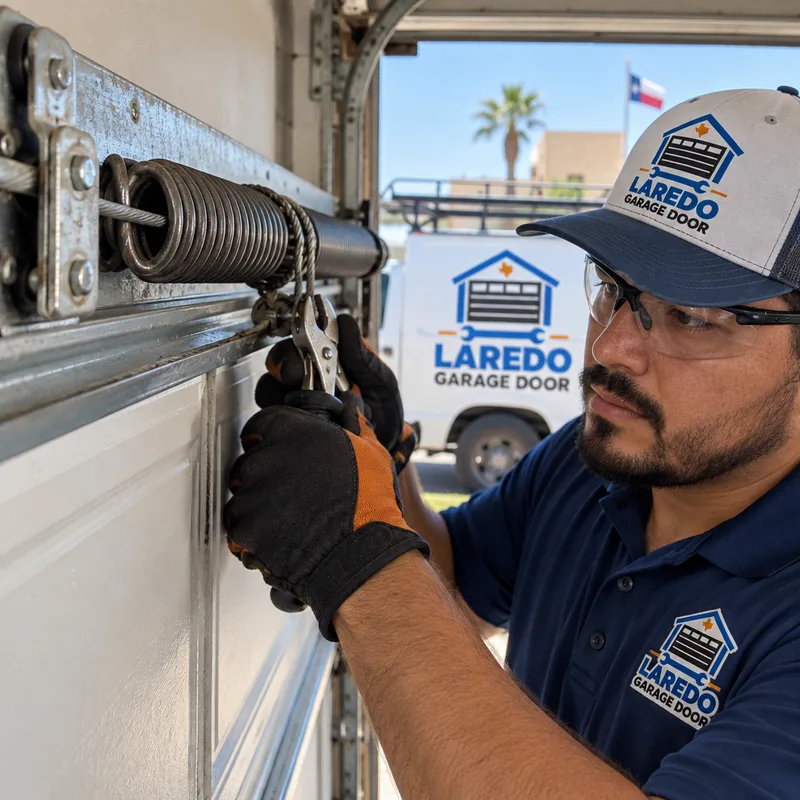
A broken spring often shows up as a door that won't open, opens a few inches and stops, feels extremely heavy by hand, or makes the opener strain. On torsion systems you can usually see a separation in the coil above the door; on extension systems you may see a hanging spring or a door that lifts unevenly.
It can be unsafe because the door is no longer counterbalanced and can drop unexpectedly or lift crooked, which can pull cables off the drums. If you need to move a vehicle out, explain your situation on the call so the contractor can tell you what to do while you wait and what not to force.
Torsion springs mount on a shaft above the door and are wound to a specific tension; extension springs run alongside the horizontal tracks and stretch as the door closes. The parts, safety checks, and adjustment method differ, so it helps to mention what you see above or along the tracks when you call.
On a two-spring torsion setup, the springs usually have similar cycle wear, so the contractor may recommend replacing the pair to keep lift balanced and reduce the chance of the other spring failing soon after. Your contractor can explain the condition they find and the options based on your door's configuration.
Start with the symptoms—won't open, loud bang, crooked lift, or loose cable—and whether the door is single or double wide. If you can do it safely, note whether you see springs above the door or along the tracks, and whether the door is currently stuck open or closed.
For many standard residential doors, spring replacement is commonly completed in a single visit once the correct springs and related parts are on hand, because it involves securing the door, swapping parts, setting tension, and testing balance. The exact time depends on door size, hardware condition, and whether cables, bearings, or drums also need attention.
Spring work is high-risk because torsion springs are wound under significant torque and extension springs can recoil. Most homeowners choose to have a contractor handle it, and you can use the call to ask how they secure the door, size the spring, and check the system after replacement.
A loose or off-drum cable is common after a spring failure because the door can lift unevenly. The contractor typically re-seats the cable, inspects it for fraying, checks the drums and bottom brackets, and then balances the door so the cable tracks correctly during travel.
Tell us what your garage door is doing and what you noticed around the springs or cables. We'll connect you with a local Laredo-area contractor who can assess the setup and take it from there.